Keyestudio ESP32 Learning Kit Ultimate Edition: what you can build
Every project in Mokxi that the parts in the Keyestudio ESP32 Learning Kit Ultimate Edition can build, from a first blink up, and the few parts to add for more. Open any of them in the editor with no account.
Not affiliated with Keyestudio. Lesson titles are referenced so you can follow along.
Everything the Keyestudio ESP32 Learning Kit Ultimate Edition can build
33 projects use only the parts in this box, ordered from a first blink to the hardest.
Beginner (20)
- MicroPython serial echo: input() on an ESP32
- MicroPython serial print: the ESP32’s running time
- MicroPython WiFi access point mode on an ESP32
- MicroPython WiFi station mode on an ESP32
- MicroPython joystick on GPIO 36, 39 and 14
- MicroPython servo sweep on GPIO 15
- DevKitC blink
- MicroPython blink on ESP32 GPIO 2
- MicroPython breathing LED with PWM on GPIO 2
- MicroPython DHT sensor: temperature and humidity
- MicroPython color wheel on a common-anode RGB LED
- MicroPython random colors on a common-anode RGB LED
- MicroPython knob points a servo: GPIO 34 and 15
- MicroPython button on GPIO 13 lights an LED
- MicroPython dimmer: a knob on GPIO 36, an LED on 25
- MicroPython night lamp: a photoresistor dims an LED
- MicroPython motion sensor lights an LED
- MicroPython table lamp: a button toggles an LED
- Motion light
- MicroPython doorbell: a button sounds a buzzer
Intermediate (11)
- MicroPython WiFi AP and station at once on an ESP32
- MicroPython 4x4 keypad on an ESP32
- MicroPython stepper motor on a ULN2003 board
- MicroPython HC-SR04 distance, timed by hand
- MicroPython HC-SR04 distance with a driver file
- MicroPython thermometer: a thermistor on GPIO 36
- MicroPython 7-segment digit through a 74HC595
- MicroPython infrared remote codes on GPIO 15
- MicroPython color mixer: three knobs, one RGB LED
- MicroPython alarm siren on a passive buzzer
- MicroPython remote sets an LED’s brightness
Add a few parts, unlock more projects
The smallest shopping lists that open the most new projects for the Keyestudio ESP32 Learning Kit Ultimate Edition.
Add Slide switch
Unlocks 3 more projects:
Add LED bar graph, 10 segments and Slide switch
Add LED bar graph, 10 segments, Slide switch and Addressable RGB LEDs
Projects that combine two kits
Own another kit as well? These need parts from both boxes, and neither can build them alone.
The kit’s parts, and what plays them here
The parts in the Keyestudio ESP32 Learning Kit Ultimate Edition, by the names its maker gives them. Each one is in the editor’s parts panel.
- ESP32 Mainboard ESP32-DevKitC V4 Plays the kit’s ESP-WROOM-32 board: the same ESP32 chip and the same GPIO numbers.
- Breadboard Full-size breadboard
- Blue, Red, Yellow and Green LED (10 of each) LED
- RGB RGB LED
- 220Ω, 10KΩ and 1KΩ Resistor (10 of each) Resistor
- 10KΩ Potentiometer Potentiometer
- Active Buzzer Buzzer
- Passive Buzzer Piezo speaker
- Button (4) and Yellow Cap (4) Pushbutton
- Tilt Switch Tilt switch
- Photoresistor (2) Light sensor
- Flame Sensor Flame sensor
- IC 74HC595N 74HC595 shift register
- 1-Digit Tube Display Seven segment display Common cathode in the kit.
- 4-Digit Tube Display Four-digit seven segment, multiplexed
- 8*8 Dot Matrix Display Not simulated yet: the kit’s matrix is driven by an HT16K33 over I2C. The MAX7219 matrix module is simulated.
- Temperature and Humidity Sensor Temperature and humidity, DHT22 The kit’s sensor is an XHT11; set to DHT11.
- LCD_128X32_DOT Not simulated: an I2C 128x32 LCD with an ST7567A driver, which Mokxi does not have.
- IR Receiver Infrared receiver, VS1838B
- IR Remote Controller Infrared remote, 21 buttons
- Servo Hobby servo
- 4x4 Membrane Keypad Keypad, 4x4
- 130 DC Motor Fan module, L9110 The tutorial uses it as a 130 motor module with its own HR1124S driver chip; the fan module plays it, with the same two control inputs.
- Fan The fan blade for the motor; nothing to place.
- Stepper Motor Driver Board and Stepper Motor Stepper motor, 28BYJ-48 with ULN2003
- Joystick Module Thumb stick
- Sound Sensor Sound sensor, KY-038 The kit’s sound sensor has an analog output only.
- PIR Motion Sensor Motion sensor
- RFID Module, ABS Key Chain and White Card RFID reader, MFRC522 The kit’s RC522 module talks I2C; this part is wired over SPI. Its cards are on the part: click one onto the reader.
- Ultrasonic Sensor Ultrasonic ranger
- LM35 Temperature Sensor Temperature sensor, LM35
- 5V Relay Module Relay module
- 10K Thermistor Thermistor, 10k NTC
- NPN transistor(S8050) and PNP transistor(S8550) Transistor (NPN or PNP)
- Keyestudio bread board special power module Breadboard power supply, MB102
- Battery Holder Battery: AA, coin cell, LiPo Holds six AA cells (not included) for the power module.
- Resistance Card A resistor color code card; nothing to place.
- USB Cable, Jumper Wire (30) and M-F Dupont Wire (40) The editor connects the board for you, and wires are drawn between pins.
Parts list read from Keyestudio’s online tutorial. An item with no part beside it has no match in the editor yet.
A link and a QR code for this page
Print either one beside a lesson, or tape it inside the box lid. Both open this page.
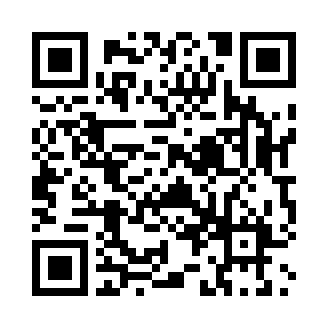
mokxi.com/k/keyestudio-esp32-learning
The code is black on white with a quiet border, so it prints and scans at any size from 2 cm up.
Download the QR code (SVG)Make kits? See what we offer kit makers.
Questions about this page
Is this made by Keyestudio?
No. Mokxi is independent and is not affiliated with Keyestudio. The page follows the kit’s lessons so you can use the two side by side; the circuits, sketches and explanations are Mokxi’s own.
Do I need the kit?
No. Every lesson that runs here runs in the browser, so you can try them before you buy a kit, or keep going while a part is missing or broken.
Is the code the same as in my manual?
The pins and the parts are the same, and the sketches use the same libraries where the kit does. The code itself is written for this page, with comments that explain each step, so it will not match the manual line for line.
What do "with a change" and "coming soon" mean?
A lesson marked "with a change" runs, but something differs from the kit, and the note under it says exactly what. "Coming soon" means we cannot simulate that lesson yet, and the note says why. We do not mark a lesson as running unless it does.
Is it free?
Yes. Every lesson on this page opens with no account. A free account saves your own copies of the circuits.
Other kits
Companion pages for more starter kits.
Start with the first project
Every project opens in the editor with no account and nothing to install. Run it, change a number, run it again.