Adafruit MetroX Classic Kit: what you can build
Every project in Mokxi that the parts in the Adafruit MetroX Classic Kit can build, from a first blink up, and the few parts to add for more. Open any of them in the editor with no account.
Not affiliated with Adafruit. Lesson titles are referenced so you can follow along.
Everything the Adafruit MetroX Classic Kit can build
101 projects use only the parts in this box, ordered from a first blink to the hardest.
Beginner (71)
- EEPROM: memory that survives a reset
- Serial echo: the board repeats what you type
- LCD1602 on pins 4, 6 and 10 to 13
- LCD1602 on pins 7 to 12
- LCD1602 hello
- Passive buzzer scale on pin 12
- Passive buzzer module on pin 3
- Passive buzzer on pin 8
- Servo sweep
- Servo sweep on pin 10
- Servo sweep on pin 3
- Siren on a passive buzzer (pin 9)
- Twinkle, Twinkle, Little Star on a passive buzzer (pin 9)
- Read a knob
- Operating point and sweep
- Digital piano
- Fade an LED
- First blink
- IR decoder
- Blink an LED on pin 13, once a second
- Blink an LED on pin 3
- Blink an LED on pin 8
- Blink an LED on pin 9
- Breathing LED on pin 5
- Button on pin 12 lights the LED on pin 13
- Flowing lights on pins 2 to 9
- IR remote codes on pin 12
- IR receiver module on pin 11
- IR receiver on pin 2
- LED module on pin 7, blinking
- An LED on the 5 V pin
- Mood dial
- Four brightnesses from PWM: pins 5, 6, 9 and 10
- RGB colors on pins 11, 10 and 9
- RGB LED on pins 3, 5 and 6
- RGB fade on pins 6, 5 and 3
- RGB LED module: red 11, blue 10, green 9
- Random colors on an RGB LED (pins 11, 10 and 9)
- Set the LED on pin 11 from the serial monitor
- A knob on A0 points the servo on pin 3
- Traffic lights on pins 3, 4 and 5
- Two LEDs take turns on pins 4 and 5
- RGB color mixer
- Arduino Uno blink
- Button and LED
- Passive buzzer alarm on pin 9, through a transistor
- Push button on pin 12 lights the LED on pin 9
- A push button lights an LED, no code
- Push button on pin 12 toggles the LED on pin 9
- Dinosaur game player: light sensor on A0, servo on 9
- Doorbell: button on pin 2, buzzer on pin 8
- Remote control light switch (IR on 12, servo on 11)
- Four-key keyboard
- Knob on A0 dims the LED on pin 9
- Photoresistor night light: A0 dims the LED on pin 9
- Light meter: photoresistor on A0, LEDs on pins 5 to 12
- Warm-hands meter
- Three knobs mix an RGB LED (pins 11, 10 and 9)
- Starship control panel
- Traffic lights with a crossing button on pin 8
- Two buttons, one LED
- Warm or cool light: a knob blends an RGB LED
- Night light
- Ofrenda candles
- Piezo melody
- Dimmer
- Night light with a light sensor
- Metronome
- Police lights and siren
- Rescue beacon
- Relay on pin 8 through a transistor
Intermediate (28)
- Two Arduino Unos talking over serial
- LCD1602 in 8-bit mode on pins 2 to 12
- Thermometer
- Arpeggiator
- LED bar chaser
- Falling rain on eight LEDs (74HC595, pins 11, 12 and 13)
- Flowing light on a 74HC595 (pins 11, 8 and 12)
- Eight LEDs on a 74HC595 (pins 12, 9 and 11)
- Eight LEDs on a 74HC595 (pins 2, 5 and 4)
- A light runs along eight LEDs on a 74HC595 (pins 11, 12 and 13)
- Serial monitor drives eight LEDs (74HC595)
- Remote-controlled lamps
- Photocell bar graph on a 74HC595
- Photoresistor bar graph on a 74HC595 (pins 9, 12 and 11)
- Remote-controlled colors: IR on pin 2, RGB on 11, 10 and 9
- Photocell light meter
- Looper
- Motor on a transistor
- Servo turnouts with a panel
- Reaction duel
- Tap-tempo metronome
- ADSR synth
- Knock lock on the book’s pins
- Ringtone player
- Memory math game on an LCD and an IR remote
- Relay switches a motor
- Lion dance head
- Relay switches a motor: button on 12, relay on 9
Add a few parts, unlock more projects
The smallest shopping lists that open the most new projects for the Adafruit MetroX Classic Kit.
Add Addressable RGB LEDs
Unlocks 13 more projects:
Add Character LCD with I2C backpack and Addressable RGB LEDs
Unlocks 24 more projects:
Add Character LCD with I2C backpack, Seven segment display and Addressable RGB LEDs
Unlocks 34 more projects:
Projects that combine two kits
Own another kit as well? These need parts from both boxes, and neither can build them alone.
The kit’s parts, and what plays them here
The parts in the Adafruit MetroX Classic Kit, by the names its maker gives them. Each one is in the editor’s parts panel.
- Adafruit Metro (Arduino Prototyping Bundle) Arduino Uno R3 Plays the Metro 328: the same ATmega328P, and Adafruit says to pick "Arduino UNO" in the IDE.
- Half size breadboard (Arduino Prototyping Bundle) Half breadboard
- Acrylic holder (Arduino Prototyping Bundle) A mounting plate; nothing to place.
- 65 Piece Jumper Wire Bundle Wires are drawn between pins in the editor.
- Full color printed 32-page Experimenter’s Guide and 13 color Breadboard Layout Sheets Printed guide; nothing to place.
- USB Cable The editor connects the board for you.
- 9V battery clip Battery: AA, coin cell, LiPo The battery is set to 9 V; the kit has the clip, not the battery.
- Micro Servo Hobby servo
- DC Toy Motor DC motor
- Mini Remote Control Infrared remote, 21 buttons
- 16x2 LCD + extras Character LCD, 16x2
- Force Sensitive Resistor Force-sensing resistor
- 1x 10K Pot Potentiometer
- 1x Piezo Buzzer Piezo speaker
- 3x 10K, 3x 2.2K and 25x 560ohm 5% Resistors Resistor
- 2x IN4001 Diode Diode
- 1x 5V Relay DPDT relay A bare relay in the kit; the two-pole relay plays it with one pole used.
- 1x TMP36 Temperature Sensor Temperature sensor
- 1x 74HC595 Chip 74HC595 shift register
- 3x Extra-long Servo Pin and 16-pin Male Header Header pins; nothing to place.
- 1x Headphone Jack Not simulated: no audio jack part yet.
- 2x PN2222 Transistor (NPN or PNP) Set to NPN.
- 1x 220uF / 6.3V Electrolytic Capacitor Capacitor
- 2x 12mm Tactile Switch Pushbutton
- 1x IR Sensor Infrared receiver, VS1838B The kit’s IR receiver; the VS1838B plays it.
- 1x HW-5P-1 Light Sensor Light sensor
- 1x 5mm IR LED Infrared LED, 940 nm
- 1x Diffused RGB LED RGB LED
- 1x Diffused 10mm Blue LED, 10x Diffused Red 5mm LED, 10x Diffused Green 5mm LED LED
Parts list read from Adafruit’s product page. An item with no part beside it has no match in the editor yet.
A link and a QR code for this page
Print either one beside a lesson, or tape it inside the box lid. Both open this page.
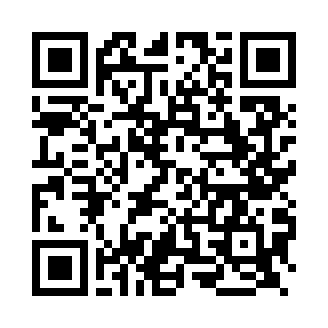
mokxi.com/k/adafruit-metrox-classic
The code is black on white with a quiet border, so it prints and scans at any size from 2 cm up.
Download the QR code (SVG)Make kits? See what we offer kit makers.
Questions about this page
Is this made by Adafruit?
No. Mokxi is independent and is not affiliated with Adafruit. The page follows the kit’s lessons so you can use the two side by side; the circuits, sketches and explanations are Mokxi’s own.
Do I need the kit?
No. Every lesson that runs here runs in the browser, so you can try them before you buy a kit, or keep going while a part is missing or broken.
Is the code the same as in my manual?
The pins and the parts are the same, and the sketches use the same libraries where the kit does. The code itself is written for this page, with comments that explain each step, so it will not match the manual line for line.
What do "with a change" and "coming soon" mean?
A lesson marked "with a change" runs, but something differs from the kit, and the note under it says exactly what. "Coming soon" means we cannot simulate that lesson yet, and the note says why. We do not mark a lesson as running unless it does.
Is it free?
Yes. Every lesson on this page opens with no account. A free account saves your own copies of the circuits.
Other kits
Companion pages for more starter kits.
Start with the first project
Every project opens in the editor with no account and nothing to install. Run it, change a number, run it again.