Projects with a pressure transducer
4 Mokxi projects use a pressure transducer (1 beginner, 1 intermediate and 2 advanced). They run on Arduino Uno boards. Here are all of them, from “Water pressure gauge” to “Deep-sea dive computer”. Each card says what the project does, the board and parts it needs and its level, and Open in the simulator runs it in your browser in one click, with no account.
How to pick your first one
- Start with “Water pressure gauge”, a beginner project that needs a pressure transducer and an I2C LCD.
- All of them run on an Arduino Uno, so that is the one board you need.
- The parts used most here are the LED (2 projects), the push button (2) and the buzzer (1). With those on hand, most of this list is open to you.
- Before you build one on a real bench, open the 0.5 to 4.5 V pressure sender part page for its pins and what each one does.
4 projects ready to run
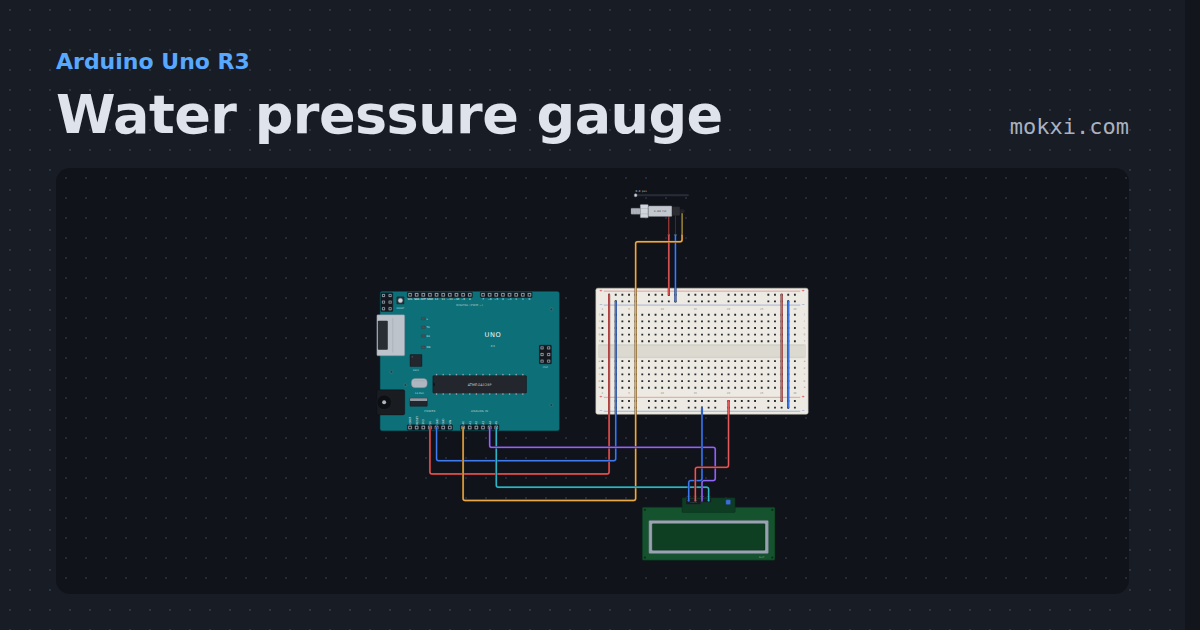
Water pressure gauge
A 0.5 to 4.5 V stainless pressure transducer on a water line and a 16x2 I2C LCD: the pressure in psi and bar, with a warning when it drops.
- Board
- Arduino Uno R3
- Parts
- 0.5 to 4.5 V pressure sender, I2C LCD
- Level
- Beginner
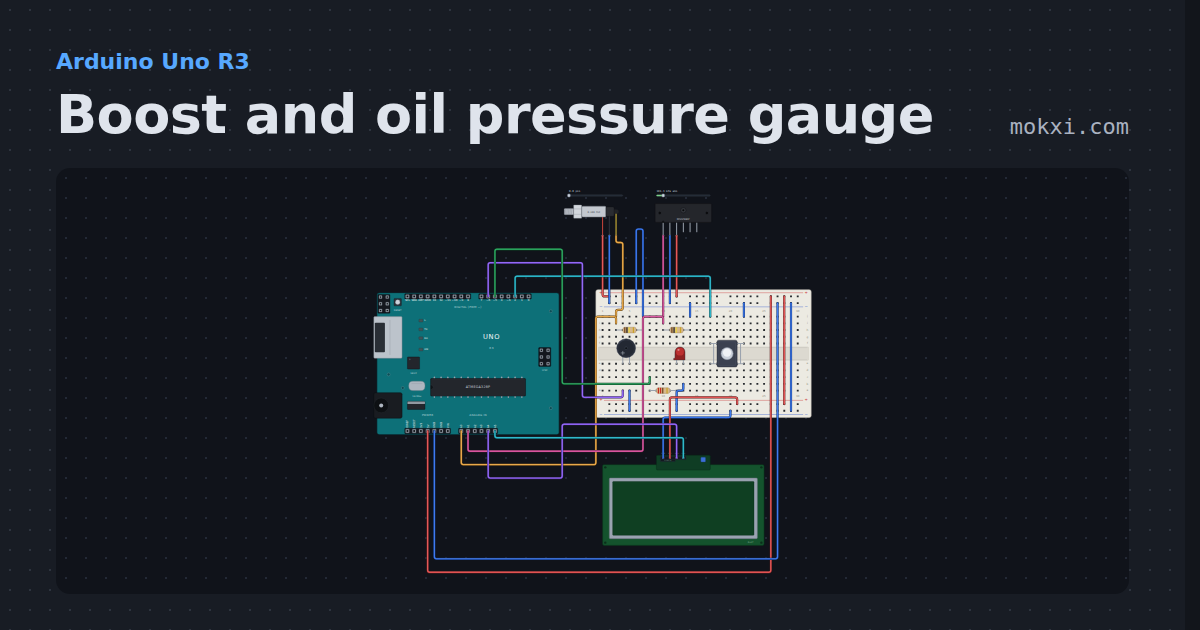
Boost and oil pressure gauge
Oil pressure from a 0.5 to 4.5 V sender and boost or vacuum from an absolute MAP sensor on a 20x4 LCD, with a resettable peak boost.
- Board
- Arduino Uno R3
- Parts
- 0.5 to 4.5 V pressure sender, pressure sensor, resistor, push button, buzzer, +2 more
- Level
- Intermediate
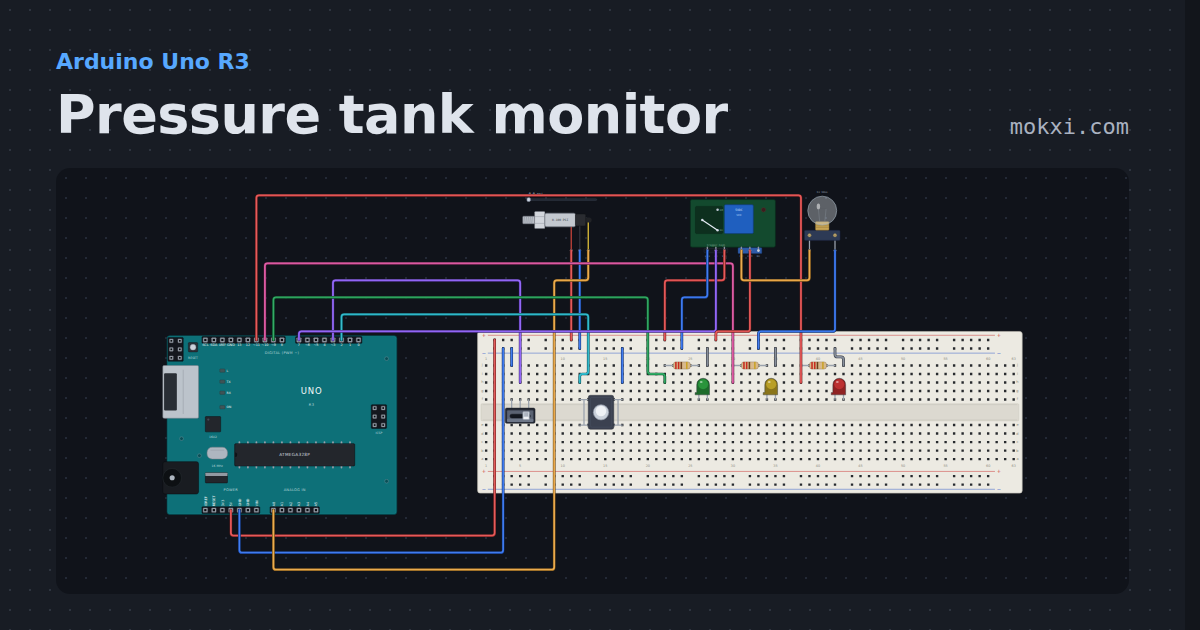
Pressure tank monitor
A pressure transducer and a pump relay run a 40/60 or 30/50 psi cut-in and cut-out, count pump cycles and run time, and flag short cycling.
- Board
- Arduino Uno R3
- Parts
- 0.5 to 4.5 V pressure sender, relay module, filament lamp, slide switch, push button, +2 more
- Level
- Advanced
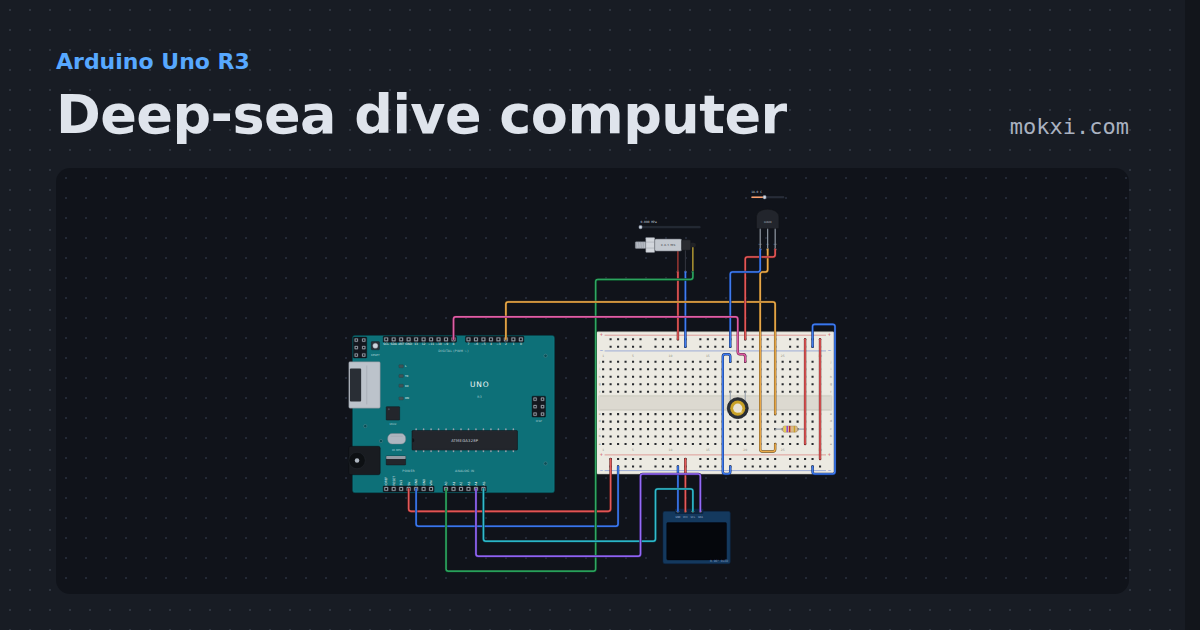
Deep-sea dive computer
A pressure transducer turned into depth (about 1 atm per 10 m of sea water), a DS18B20 water probe.
- Board
- Arduino Uno R3
- Parts
- 0.5 to 4.5 V pressure sender, DS18B20 temperature sensor, resistor, SSD1306 OLED display, piezo speaker
- Level
- Advanced